1. State of the union
Over the past few years AI has grown sharply by every measure, while public trust in it and perception of it have declined. We look at where public trust and perception of AI stand today, and how the industry can reconnect with people.
The chart below overlays Google search interest in AI against each major lab's model performance over the same period. Performance scores are the public, independently produced AA Index 4.0 benchmark aggregate from Artificial Analysis.
For the most part, search interest grows with model performance, matching and usually exceeding it. That tells us people are paying attention either way. To find out whether that attention is positive or negative, we turn to more search data and to public polling.
2. Negative sentiment
The first chart below aggregates Google Trends data for negative queries tied to common criticisms and fears: "AI slop" (a pejorative for AI output), "AI power usage" (a common concern), and "Will AI take my job?" and "AI resistant jobs" (a common fear). The data was collected from Google Trends on June 4, 2026.
By the end of the period, negative interest nearly tracks overall interest in "AI", reaching a search interest score of 54. That is still about 30 points below interest in AI as a whole, but it is a large share of it.
The next two charts show public sentiment toward AI as measured by the Pew Research Center, retrieved on June 4, 2026.
From this data it is reasonable to conclude that most people do not like AI, at least in the way it is being used today. People feel their jobs are threatened, and they worry that AI will erode their ability to do basic things in the future. That is a problem when the goal, as it is for us at LucidityAI, is to bring people and AI together.
3. The death of nuance and the rise of polarization
Because AI is so controversial, people have sorted themselves into tribes for and against it, calling each other "AI haters" or "anti-AI" on one side and "AI bros" on the other. At the extremes, the positions range from "AI in any form is evil" to "AI is the undeniable future, with no flaws."
This makes attempts to reconnect with the public less effective, because reasoned arguments get dismissed as "shilling for AI". It becomes much harder to align the public around interests that actually serve them, rather than around two opposing views that both work against them.
So what is the solution? How can AI labs align with the public, and in turn bring the public along with them?
4. Looking deeper at the arguments
In anti-AI groups, which tend to be made up of creative people, the arguments are fairly consistent. Many are valid points that deserve to be addressed:
- AI can replace human workers.
- AI models are trained on human work, most of it used without the consent of the people who made it.
- AI datacenters, typically run by hyperscalers such as xAI, harm the environment and worsen the health of nearby residents through air pollution.
- AI can threaten the livelihoods of creative workers far sooner than those of physical workers. As of June 2026, AI can already produce images, audio, video, and text with high precision.
- AI lacks "soul" and "creativity". These are not objective claims, but they follow from the first and fourth points.
These points show real concern for the environment, and above all they show how much people fear for their livelihoods. That fear pushes them toward extreme positions instead of nuanced ones.
5. Conclusion and solutions
The issue is simple: people are scared of AI, generally dislike it, and see it as something that hurts them and their environment. The solution is to address the root of the problem, which is fear. Labs can be transparent about how models are made and align their safety work with real human goals, such as keeping human jobs and assisting with tasks rather than replacing people. Doing that instead of ignoring the concerns is a major step forward that costs very little.
AI labs know about these issues, yet do little about them. The CEO of Anthropic, for example, said in a video interview that "coding is going away first, then all of software engineering". Rather than working to avoid that outcome, labs push harder for it by encouraging large-scale automation, as with OpenAI's Tokens of Appreciation program.
AI-assisted bioweapons and industrial-scale cyberattacks are real threats. But protecting against them alone isn't enough to make people feel safe, because those threats don't touch their day-to-day lives the way the threat of replacement does.
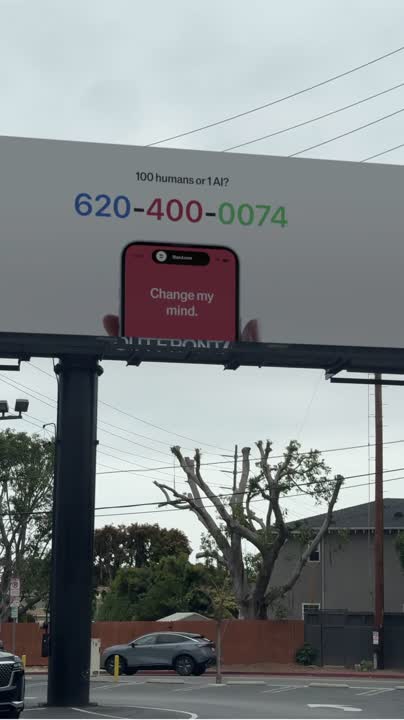
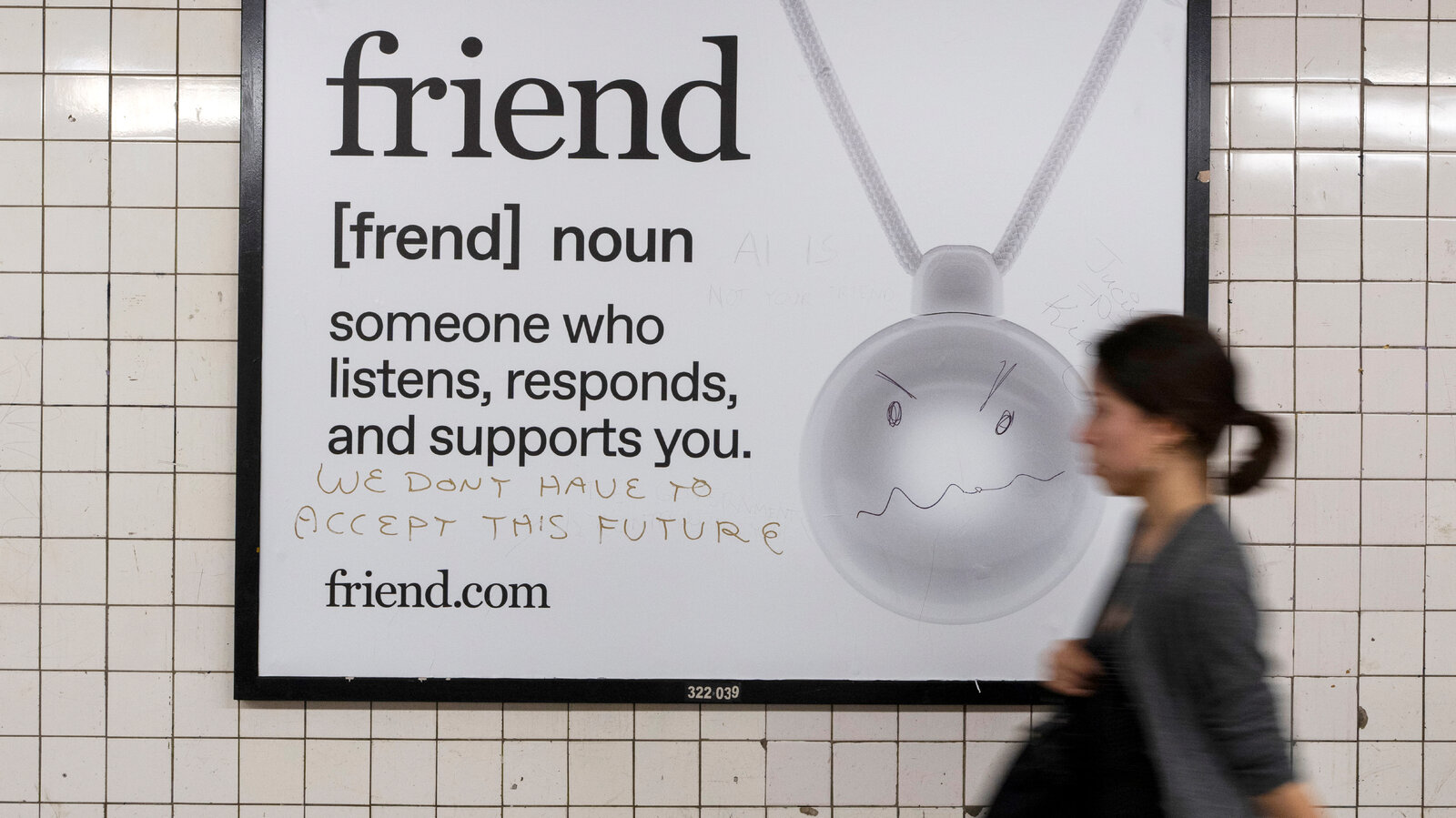
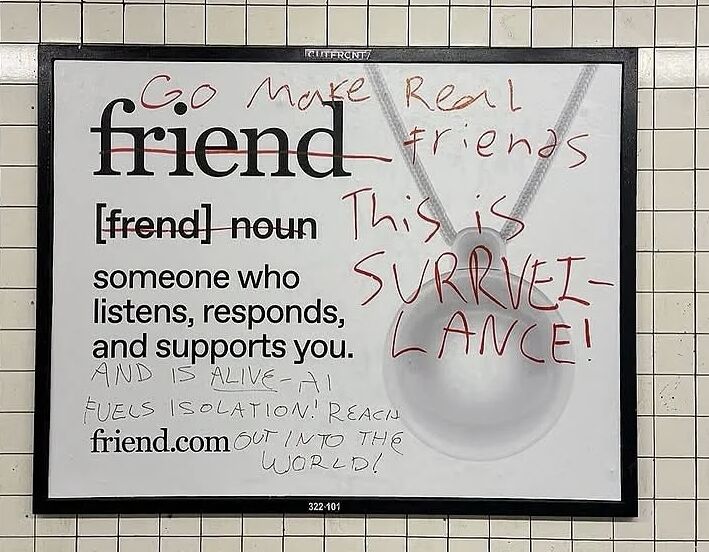
People want certainty that their jobs, lives, and futures will not be handed to AI. Marketing campaigns funded by large AI labs push for exactly the future people fear. Advertisements like the ones pictured below suggest, or outright state, that people will lose their jobs, and present that as a good thing. The backlash is expected and valid, and without real course correction the major labs are heading for disaster.
So what can labs, including us, do better?
- Build safeguards and self-regulation around AI models' capacity to replace jobs.
- Source training data responsibly, and at a minimum credit it, for both pre-training and post-training.
- Report environmental impact more honestly and mitigate the harm through carbon offsets, datacenter noise and pollution controls, and careful water use.
- Present AI as a tool, and stop helping it be sold as a total replacement for people.
- Push for stronger privacy, even when it makes training data harder to source.